💡What You'll Learn
- What tokenization really means
- How digital ownership is evolving
- Why RWAs are gaining traction
- How tokenization creates liquidity
- The future of programmable ownership
The future isn't about cryptocurrency. It's about ownership
For years, the internet was built around access.
You could access information.
Access services.
Access communities.
But ownership?
That was a different story.
Most of the things we interacted with online belonged to someone else.
Your social media audience belonged to the platform.
Your gaming assets belonged to the game developer.
Your loyalty points belonged to the company that issued them.
You could use them.
But you didn't truly own them.
Now imagine a world where almost anything can be represented as a digital asset and owned, traded, transferred, or programmed instantly. That's the promise of tokenization.
And if blockchain continues evolving the way many expect, the real question won't be whether tokenization becomes mainstream.
It'll be:
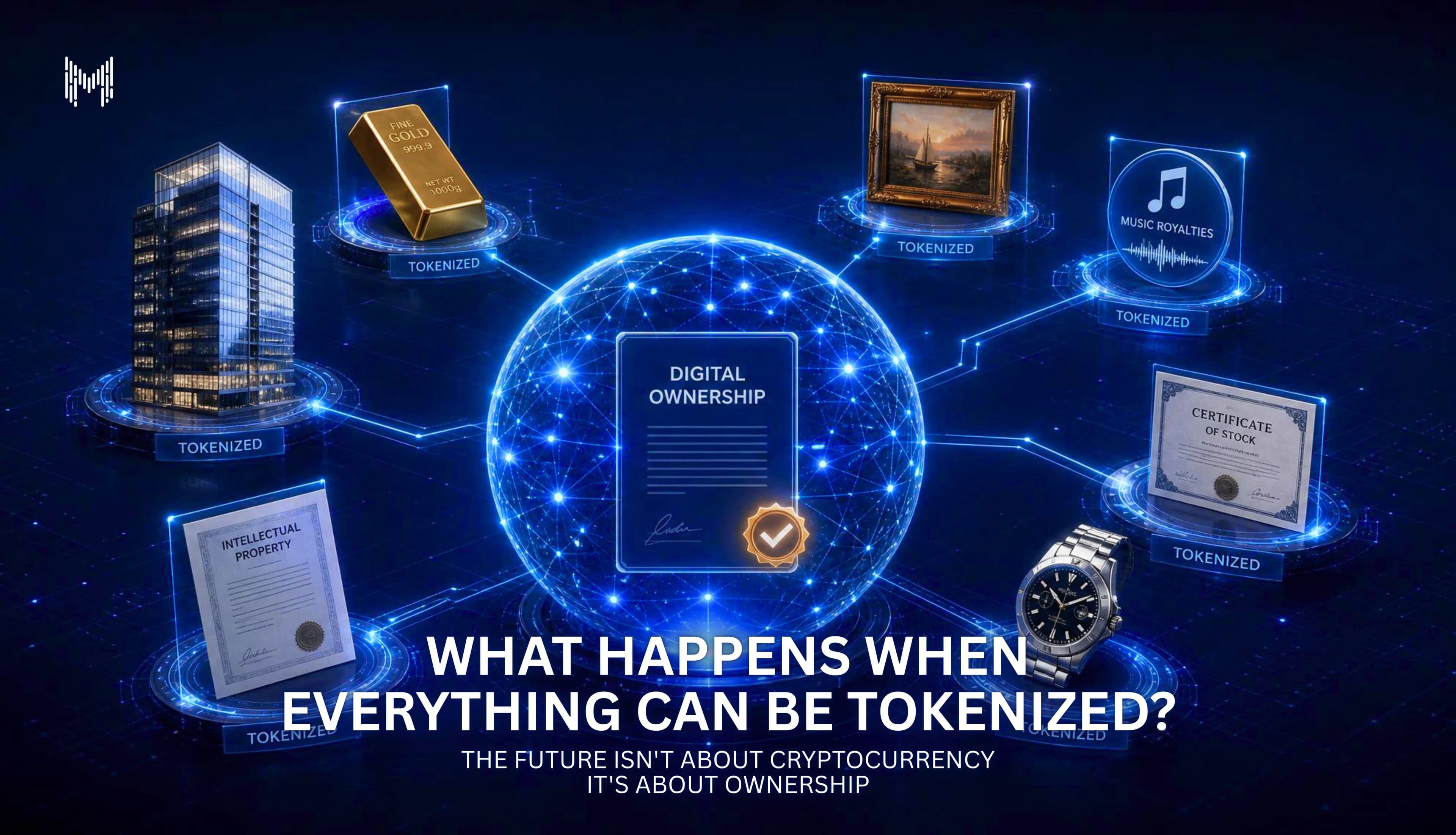
What happens when everything can be tokenized?
First, What Exactly Is Tokenization?
Tokenization is the process of converting ownership rights of an asset into a digital token on a blockchain.
That asset could be:
- Real estate
- Stocks
- Artwork
- Music royalties
- Luxury goods
- Collectibles
- Intellectual property
- Loyalty rewards
- Memberships
- Carbon credits
Or something we haven't even thought of yet.
Instead of paperwork, intermediaries, and manual transfers, ownership becomes programmable.
A token becomes proof of ownership.
Simple in theory.
Revolutionary in practice.
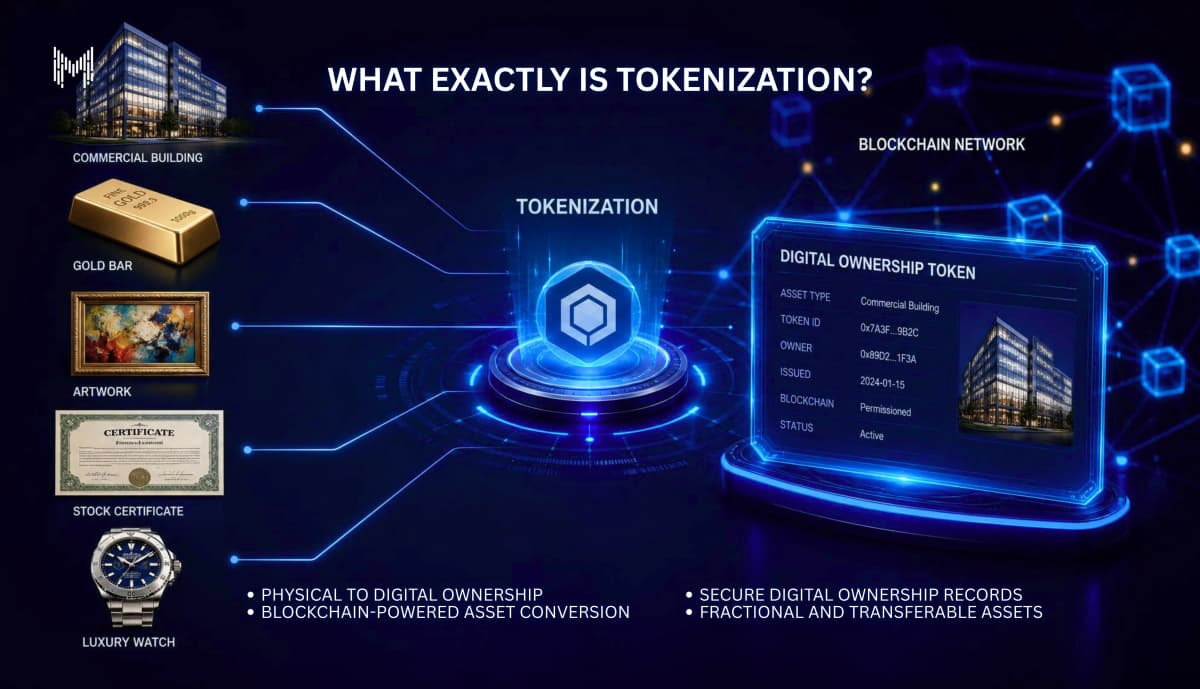
The Real Estate Example Everyone Understands
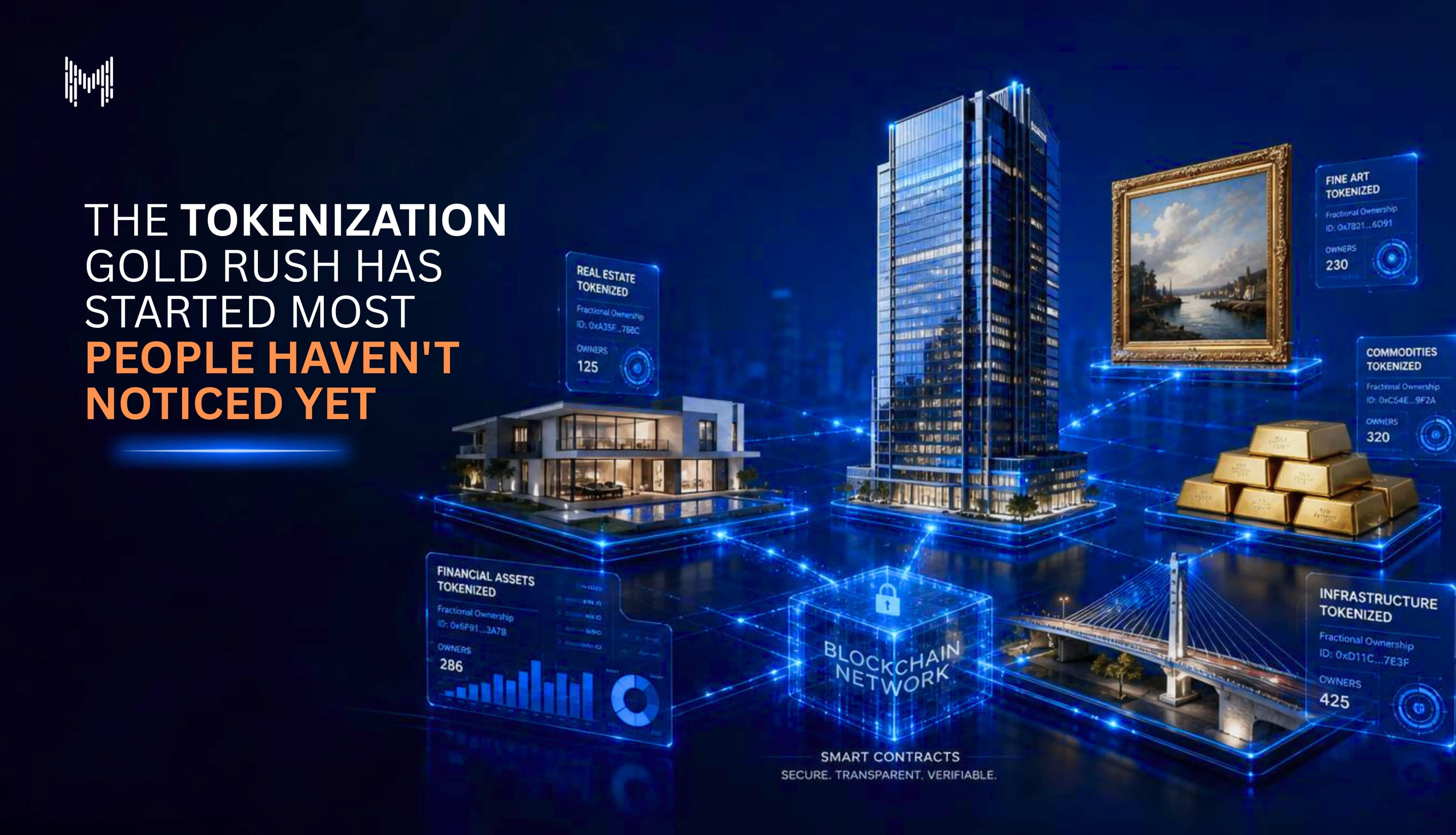
Imagine a $1 million commercial property.
Traditionally, buying it requires significant capital, legal work, and plenty of paperwork.
Now imagine that property is divided into 1 million digital tokens. Each token represents a small fraction of ownership.
Instead of needing $1 million to invest, someone could participate with $100.
Suddenly, an asset that was once available only to a small group of investors becomes accessible to almost anyone.
This is why Real-World Asset (RWA) tokenization is becoming one of the fastest-growing areas in blockchain.
It's not creating new assets.
It's making existing assets more accessible.
Ownership Starts Looking Very Different
Most industries today operate on centralized ownership models.
Companies own the value.
Users consume it.
Tokenization introduces a different model:
Users can participate in the value they help create.
Think about how much value communities generate online.
Millions of people contribute attention, content, and engagement every day.
Yet most of the economic upside flows to platforms.
Tokenization creates the possibility for communities to own a portion of the networks they help build.
That's a huge shift.
Liquidity Appears Where It Never Existed Before
One of the biggest limitations of traditional assets is liquidity.
Some assets are valuable but difficult to sell.
Examples include:
- Real estate
- Fine art
- Private equity
- Collectibles
Selling them can take weeks, months, or even years.
Tokenization changes that.
Digital ownership can be traded much more efficiently.
When liquidity increases, markets become more dynamic.
And dynamic markets create new opportunities.
But Here's Where Things Get Interesting
Not everything should be tokenized.
And not everything will be.
This is where many blockchain conversations become unrealistic.
Just because something can be tokenized doesn't mean it creates value.
Nobody is asking for tokenized coffee mugs.
Nobody needs a blockchain-powered toothbrush.
Technology succeeds when it solves real problems.
Not when it creates unnecessary complexity.
The winners in the tokenization economy won't be the projects that tokenize everything.
They'll be the projects that tokenize the right things.
Entire Business Models Could Change
Today, businesses often sell products.
Tomorrow, they may sell ownership opportunities.
Imagine:
A startup raises capital through tokenized equity.
A musician sells fractions of future royalties.
A sports club offers tokenized memberships.
A real estate developer allows global investors to participate instantly.
The relationship between companies and customers becomes more collaborative.
Users become stakeholders.
Stakeholders become advocates.
Advocates become growth engines.
That's a powerful feedback loop.
The Challenges Nobody Likes Talking About
Every technological revolution comes with trade-offs.
Tokenization is no different.
Questions still remain:
- How will regulations evolve?
- How will ownership disputes be resolved?
- How will identity verification work?
- How will fraud be prevented?
- How will taxation be handled?
Technology often moves faster than policy.
And tokenization is no exception.
The infrastructure is improving rapidly.
The legal frameworks are still catching up.
The Bigger Shift Isn't Technical
It's Psychological.
For generations, ownership has been limited.
People accepted that investing opportunities were often reserved for institutions, accredited investors, or wealthy individuals.
Tokenization challenges that assumption.
It introduces the idea that ownership can be:
- Fractional
- Global
- Accessible
- Programmable
That's not just a technological change.
It's a mindset change.
And mindset changes tend to be the ones that reshape industries.
The Future Might Not Look Like Crypto
This is perhaps the most important point.
Many people hear "blockchain" and immediately think about cryptocurrency.
But the biggest long-term impact of blockchain may have very little to do with speculative trading.
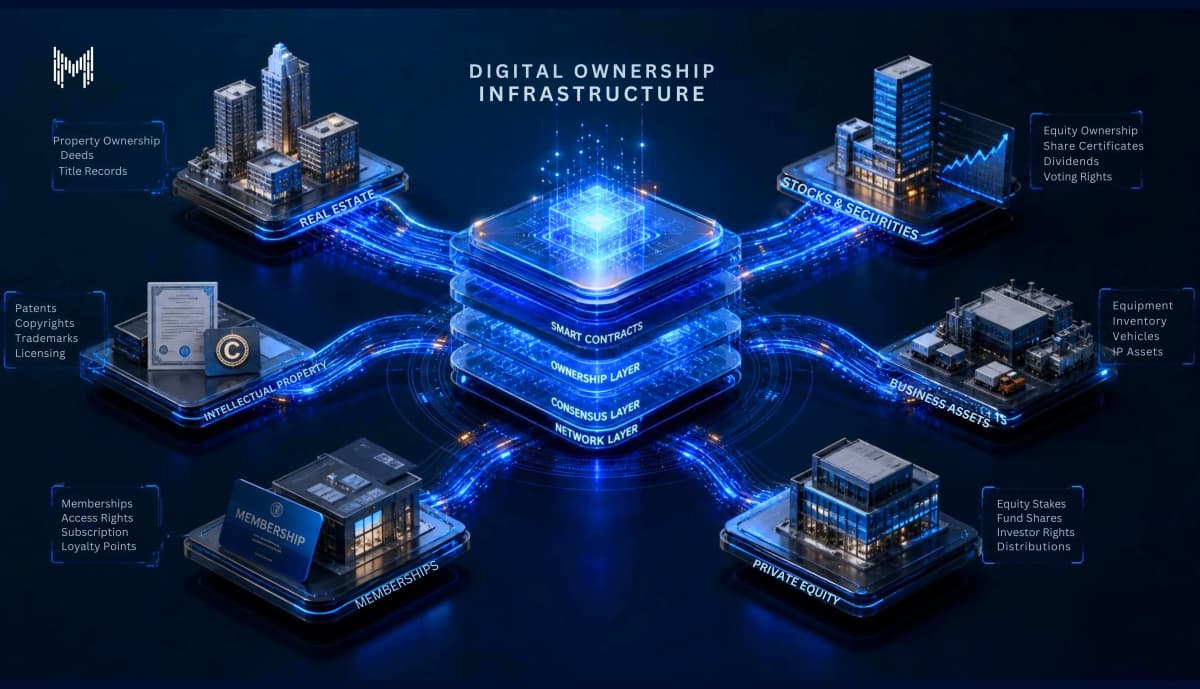
It may be about ownership infrastructure.
The same way the internet became infrastructure for information. Blockchain could become infrastructure for ownership.
Quietly.
Gradually.
Then all at once.
Why Choose Mkaits Technologies
At Mkaits Technologies, we help businesses explore the future of blockchain, tokenization, and Web3 development through scalable, secure, and user-focused solutions.
Our expertise includes:
- Real-World Asset (RWA) Tokenization
- Smart Contract Development
- Web3 Application Development
- Blockchain Consulting
- NFT Platforms
- DeFi Solutions
- Token Economy Design
Because the future isn't just digital.
It's programmable ownership.
The future of tokenization isn't about turning everything into a digital asset.
It's about making ownership more flexible, accessible, and efficient.
Some industries will change dramatically.
Others may barely change at all.
But one thing seems increasingly clear:
The next phase of the internet may not be defined by what we can access.
It may be defined by what we can own.
And if that happens, tokenization won't just change finance.
It could change how value moves through society itself.