
💡What You'll Learn
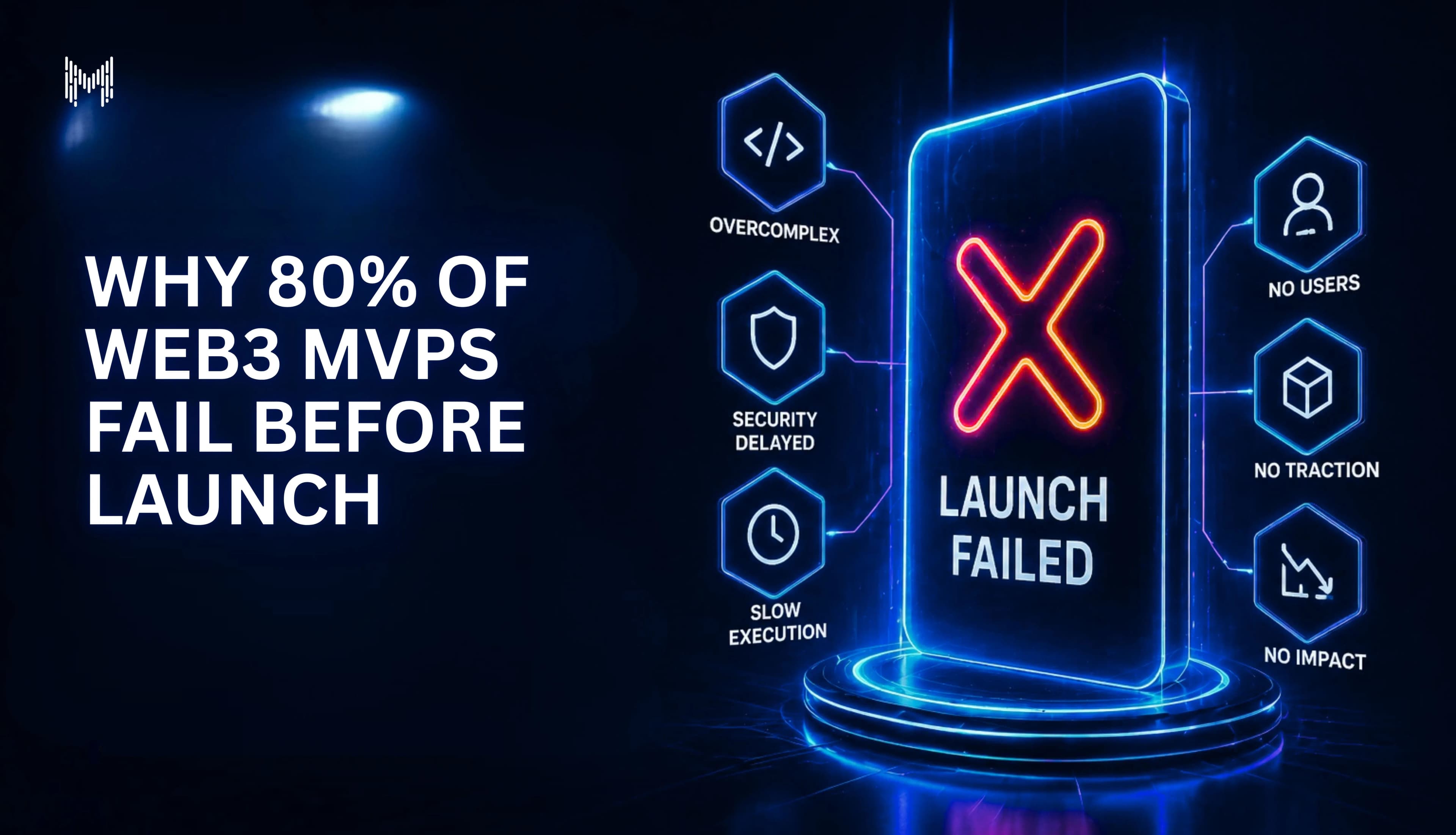
- Why most Web3 MVPs fail early
- The danger of overbuilding products
- Why security must come first
- How delays kill momentum
- What helps launch faster in Web3
It’s not bad code. It’s not weak ideas. It’s how they’re built.
There’s a pattern I’ve seen over and over again in Web3.
A team starts strong.
The idea sounds solid.
The tech stack is ambitious.
The roadmap looks impressive.
Everyone is confident.
“We just need a few months.”
But those few months turn into more.
Progress slows.
Decisions pile up.
Momentum fades.
And then…
Nothing.
No launch.
No users.
No real product in the market.
The Assumption That Breaks Everything
Most founders don’t realize this early enough:
Web3 is not just another product category.
But they treat it like one.
They follow the same thinking as Web2:
• build → refine → launch → fix later
That works in traditional apps.
It doesn’t work here.
Because Web3 changes the rules.
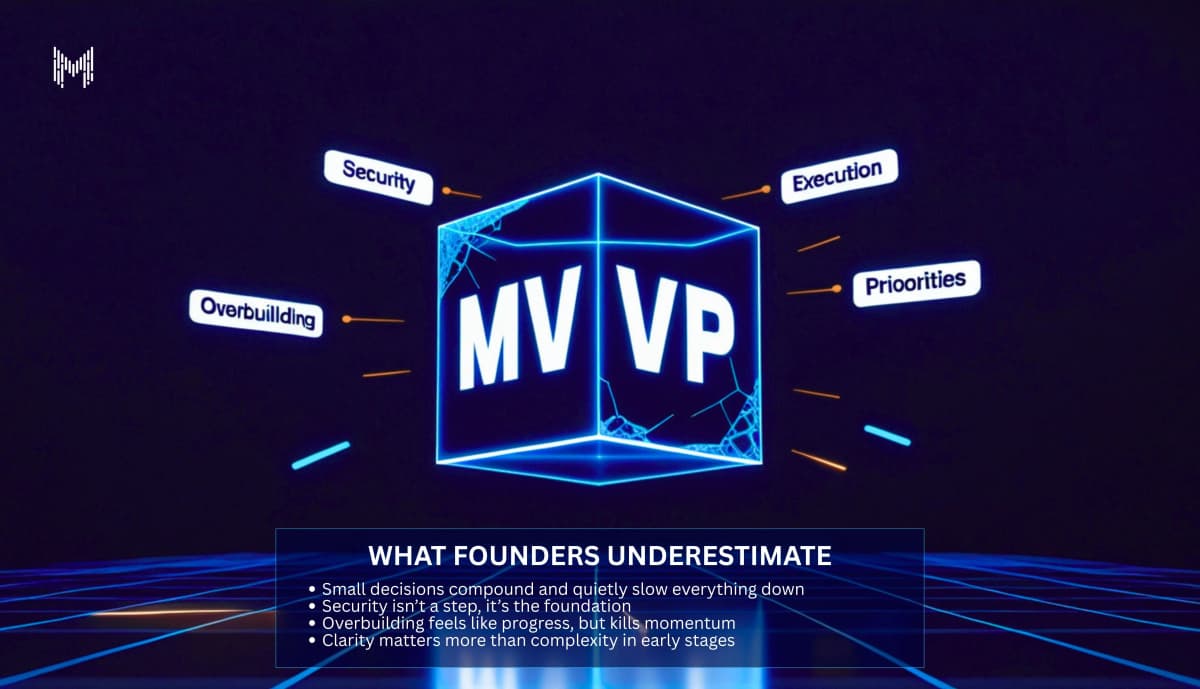
What Founders Underestimate
The failure doesn’t come from one big mistake.
It comes from a series of small assumptions.
Each one feels harmless.
Together, they kill the product before it even launches.
1. “We’ll Fix It Later” Doesn’t Exist in Web3
In most products, mistakes are fixable.
You ship an update.
You patch a bug.
You iterate.
In Web3?
Once a smart contract is deployed…
It’s live.
And mistakes aren’t just bugs.
They’re risks.
Sometimes irreversible.
Sometimes expensive.
What this leads to:
Teams become overly cautious.
They delay decisions.
They keep refining.
They avoid shipping.
And suddenly, progress slows to a crawl.
2. Security Is Treated Like a Final Step
This is one of the biggest traps.
Teams focus on:
- building features
- designing token flows
- creating dashboards
And then say:
“We’ll handle security before launch.”
But security in Web3 isn’t a checklist item.
It’s a foundation.
When security is delayed:
- code needs rework
- audits take longer
- confidence drops
And launch gets pushed further away.
3. Hiring Becomes a Bottleneck
Another hidden killer.
Instead of building with what they have…
Teams pause everything to hire.
Weeks go into:
- interviews
- onboarding
- restructuring
Meanwhile?
The product stands still.
Momentum fades.
And energy drops across the team.
4. Overbuilding Kills Speed
This one feels like progress.
But it’s not.
Teams try to launch with:
- full tokenomics
- staking systems
- governance layers
- complex dashboards
All at once.
The problem?
They’re not building an MVP anymore.
They’re building a complete ecosystem.
Before validating anything.
5. No Clear Execution Timeline
Everything feels urgent.
But nothing moves fast.
Why?
Because priorities aren’t clear.
What this looks like:
- constant changes
- shifting goals
- unfinished features
Work is happening.
But progress isn’t.
The Pattern Is Always the Same
Projects don’t fail because developers can’t build.
They fail because:
- assumptions go unchecked
- execution slows down
- focus gets lost
And by the time teams realize it…
They’ve already lost momentum.
The Real Problem Isn’t Technical
It’s strategic.
Most teams ask:
“Can we build this?”
But that’s not the right question.
Because in Web3…
Building is just the beginning.
The Real Question Is
“Can we launch this fast, securely, and without unnecessary complexity?”
That’s where most teams struggle.
What Successful Web3 Teams Do Differently
They don’t try to get everything right.
They try to get something real into the market.
Fast.
They:
- keep the MVP focused
- integrate security early
- avoid unnecessary hiring delays
- simplify execution
- prioritize launch over perfection
Because they understand one thing clearly:
You can’t learn without launching.
Speed Is Not the Enemy Confusion Is
Many teams think slowing down means being careful.
But often…
It just means being unclear.
When you’re clear:
- decisions are faster
- execution improves
- teams move with confidence
When you’re not:
- everything feels risky
- progress slows
- launch keeps getting delayed

Why This Matters Right Now
Web3 is evolving fast.
New tools.
New protocols.
New competition.
Which means:
The advantage isn’t just building.
It’s building and launching faster than others.
Why Choose Mkaits Technologies
At Mkaits Technologies, we help Web3 teams move from ideas to real, launch-ready products.
We focus on:
- MVP-first blockchain development
- security-first architecture
- simplified product design
- fast, focused execution
Because in Web3, success doesn’t come from building more.
It comes from launching what actually matters.
Most Web3 MVPs don’t fail in public.
They fail quietly.
Before users ever see them.
And the reason is rarely technical.
It’s how teams approach the process.
So if you’re building something right now…
Pause for a second.
And ask yourself:
“Are we actually moving toward launch… or just staying busy?”
Because those two things look similar.
But lead to very different outcomes.