💡What You'll Learn
- How the internet evolved from Web1 to Web3
- Why creators don’t own their audience
- What digital ownership means
- How tokenization changes industries
- Why Web3 matters for businesses
That’s the shift most people still don’t fully understand.
The internet didn’t change overnight.
It evolved in phases.
And each phase quietly changed how power worked online.
First, the internet let us consume information.
Then it let us create and share information.
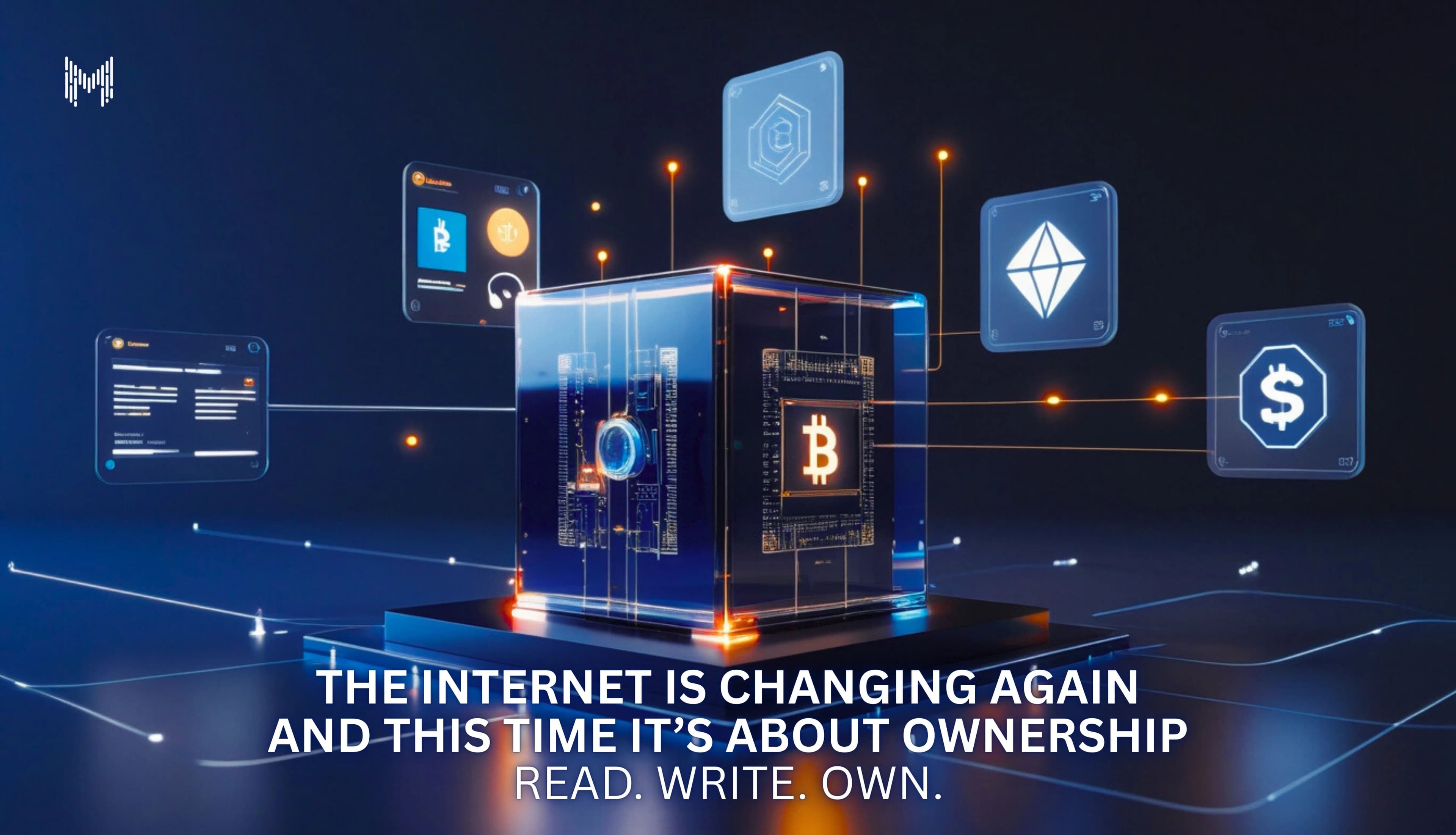
Now it’s moving toward something bigger.
Ownership.
Not just access.
Not just participation.
Actual digital ownership.
And that single shift might reshape how the internet works more than anything we’ve seen before.
The Three Eras of the Internet
Let’s simplify the story.
Web1 : The Read-Only Internet
The early internet was simple.
You visited websites.
You read articles.
You consumed information.
But that’s about it.
No social media.
No user-generated content.
No platforms where you could easily publish your own ideas.
It was mostly static pages and information portals.
You were a visitor.
Not a participant.
Web2 : The Social Internet
Then came Web2.
This is the internet most of us know today.
Suddenly, everyone could create content.
You could:
- Post on social media
- Upload videos
- Start blogs
- Build online communities
Platforms like social networks, marketplaces, and content platforms exploded.
For the first time, the internet became interactive.
It became:
Read + Write
But there was still one thing missing.
Ownership.
The Problem With Web2: You Don’t Own What You Build
Web2 gave creators a voice.
But it also created a hidden dependency.
You could build an audience.
But you never truly owned it.
The platform owned the distribution.
The algorithm controlled visibility.
Your reach could disappear overnight.
We’ve seen it happen countless times.
A creator spends years building an audience. Then:
- The algorithm changes
- Their reach drops
- Their account gets restricted
- Or the platform simply shifts priorities
Suddenly the audience they “built” isn’t really theirs.
It belongs to the platform.
And that’s where Web3 enters the conversation.
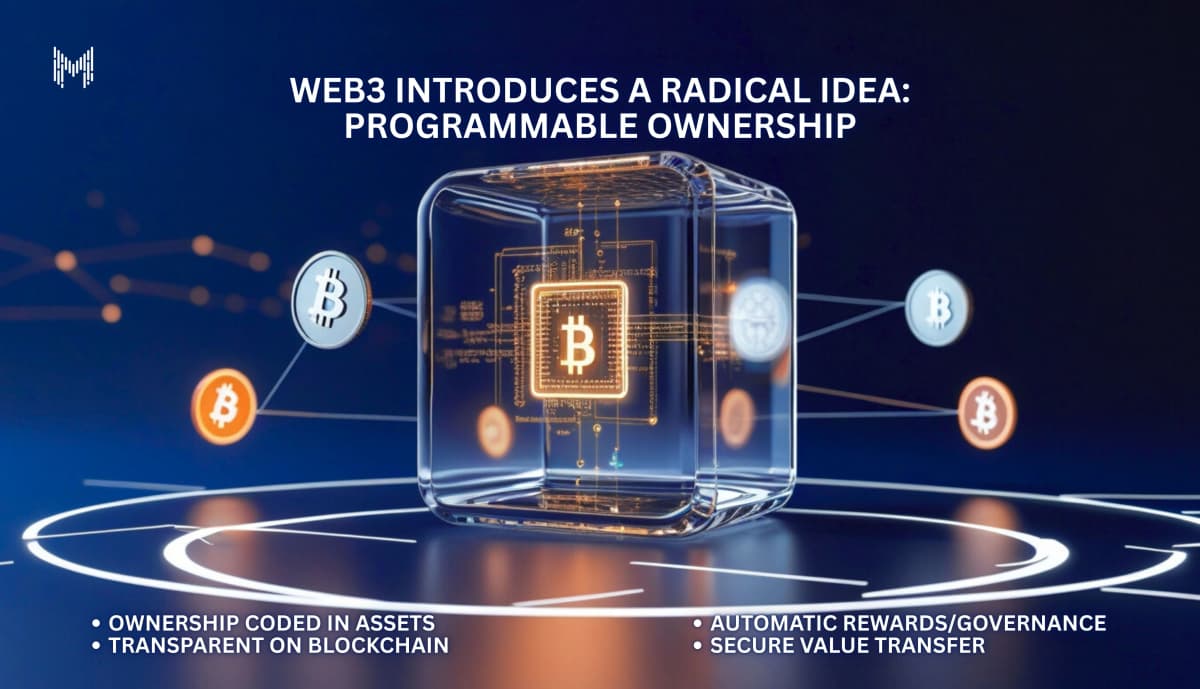
Web3 Introduces a Radical Idea: Programmable Ownership
Web3 isn’t just about cryptocurrency.
At its core, it introduces a much more powerful concept.
Programmable ownership.
This means digital assets can represent real ownership, not just access.
Through blockchain technology and tokenization, ownership can now be embedded directly into digital systems.
Instead of relying on platforms to manage value, ownership can exist independently.
This changes the rules.
What Can Be Tokenized?
A lot more than people think.
Tokenization allows real-world and digital assets to be represented as blockchain-based tokens.
Examples include:
- Real estate
- Art and digital collectibles
- Investment funds
- Startup equity
- Communities and memberships
- Loyalty programs
- Gaming assets
These tokens can represent ownership, participation, or access.
And unlike traditional systems, they can move across platforms freely.
This opens entirely new business models.
From Users to Participants
One of the biggest shifts Web3 introduces is the role of the user.
In Web2, users mostly consume value.
They watch content.
They interact with platforms.
They generate engagement.
But they rarely share in the economic upside of the platforms they help grow.
Web3 flips that idea.
Users can become participants in the system.
They can hold tokens that represent:
- governance rights
- ownership stakes
- rewards
- access privileges
Instead of just being customers, they become stakeholders.
And that changes how communities form online.
Why This Matters for Businesses
For companies, the implications are huge.
Businesses that understand digital ownership models early will have a serious advantage.
Tokenization allows companies to:
- Create new incentive structures
- Build stronger communities
- Unlock liquidity for real-world assets
- Offer fractional ownership opportunities
- Align user interests with platform growth
Instead of just attracting users, companies can build ecosystems of aligned participants.
And when incentives align, growth becomes much more powerful.
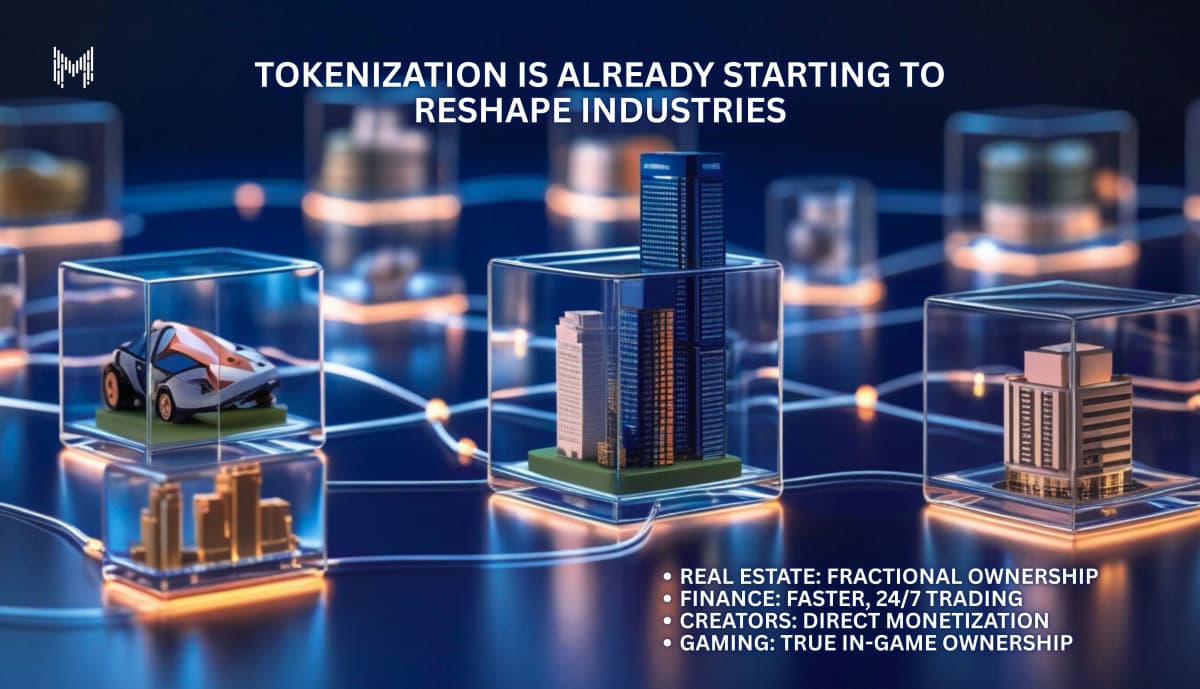
Tokenization Is Already Starting to Reshape Industries
This isn’t just theory.
We’re already seeing tokenization reshape several industries.
Real Estate
Property ownership can be fractionalized into digital tokens.
This allows smaller investors to access markets that were previously out of reach.
Finance
Tokenized assets enable 24/7 trading, faster settlement, and greater transparency.
Gaming
Players can actually own their in-game assets instead of renting them from platforms.
Creator Economy
Artists and creators can monetize directly through tokenized communities and digital assets.
Each of these changes one fundamental thing:
Who captures the value.
Will Everything Become Tokenized?
Probably not.
And it shouldn’t.
Not every asset or system benefits from tokenization.
Some systems work perfectly fine without blockchain.
But certain areas are ideal for it:
- assets that require transparency
- markets that benefit from liquidity
- communities that thrive on shared ownership
- systems where incentives need alignment
In those areas, tokenization can unlock entirely new possibilities.
The Real Shift Is Incentives
Most people think the internet changes because of technology.
But that’s only part of the story.
The real driver of change is incentives.
Web1 incentivized publishing information.
Web2 incentivized engagement and attention.
Web3 introduces incentives around ownership and participation.
And incentives shape behavior.
When people have ownership in something, they care about its success.
They contribute more.
They stay longer.
They build stronger communities.
That’s the real promise of Web3.
The Internet Isn’t Just Evolving It’s Rewiring
The shift toward digital ownership won’t happen overnight.
But it’s already underway.
More assets are becoming tokenized.
More platforms are experimenting with decentralized models.
More users are starting to understand the value of owning a piece of the systems they contribute to.
The internet isn’t just adding new features.
It’s changing the rules of participation.
And the companies that understand this early will be the ones shaping the next generation of digital platforms.
Why Choose Mkaits Technologies
At MKaits Technologies, we work at the intersection of Web3, blockchain development, tokenization, and custom digital platforms.
We help businesses turn complex emerging technologies into practical, scalable solutions.
Our expertise includes:
- Blockchain and Web3 application development
- Tokenization platforms for real-world assets (RWA)
- Smart contract development and security
- AI and blockchain integrations
- Custom software solutions for startups and enterprises
Our goal is simple:
To help businesses move from ideas to real-world Web3 products that create lasting value.