💡What You'll Learn
- Why UX will drive Web3 adoption in 2026
- Why decentralization alone won’t win users
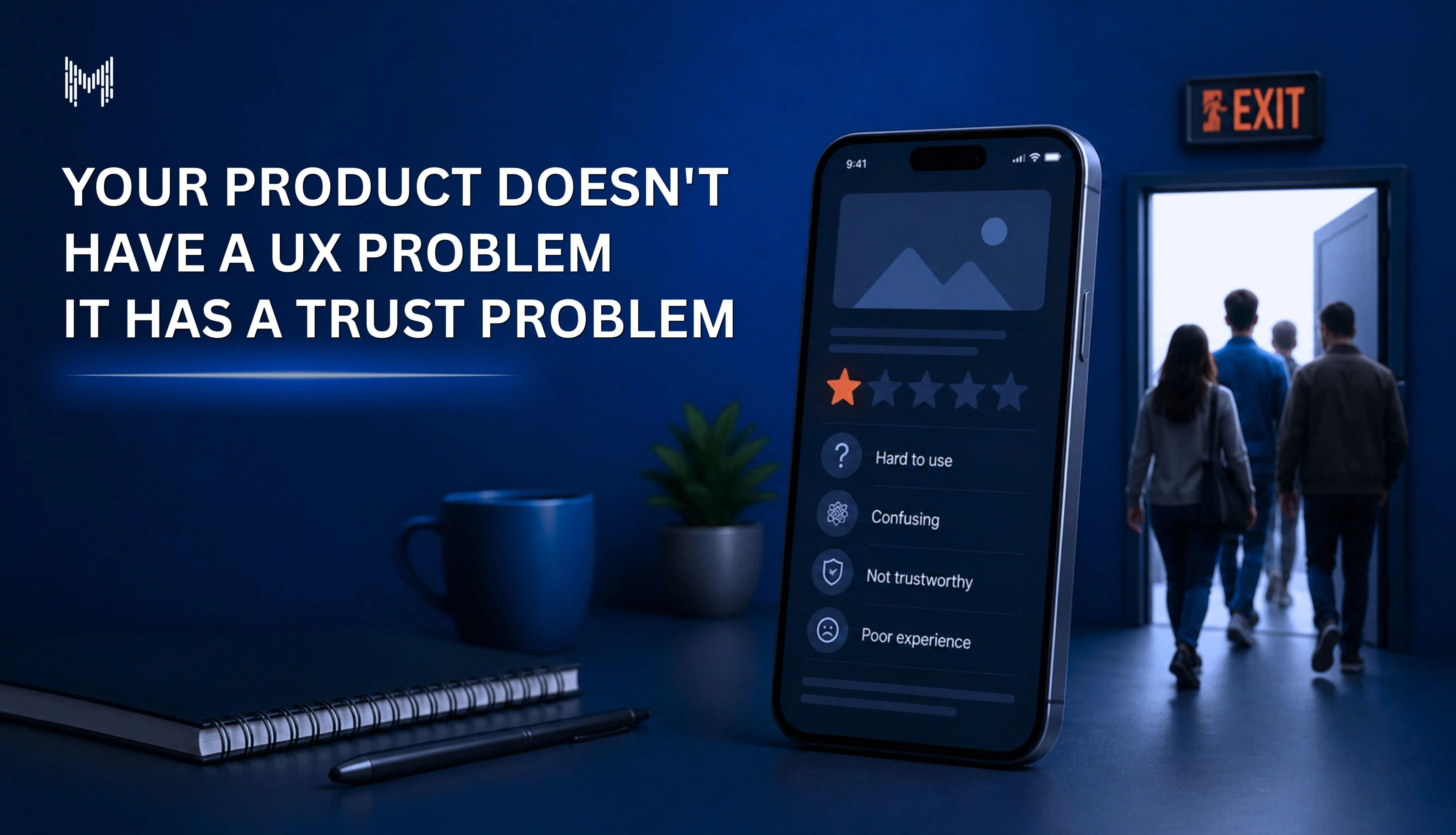
- How poor UX creates fear and distrust
- Why Web3 competes with Web2 convenience
- How clarity becomes the new trust layer
- What winning Web3 products will feel like
Let’s say the quiet part out loud.
In 2026, nobody is going to choose your Web3 product because it’s more decentralized than the alternative.
They’ll choose it because it’s easier to use.
And if that sounds uncomfortable, good it should.
Because Web3 didn’t struggle for adoption because people “don’t get decentralization.” It struggled because using most Web3 products still feels like homework.
The Lie Web3 Keeps Telling Itself
For years, Web3 has hidden behind ideology.
Decentralization.
Trustlessness.
Permissionless systems.
Censorship resistance.
All important. All valid.
But here’s the truth most teams avoid:
Users don’t wake up thinking about decentralization.
They wake up thinking about:
- Sending money
- Accessing something
- Making a transaction
- Saving time
- Not messing things up
And when the experience is confusing, scary, or fragile, they don’t care why it exists. They just leave.
Web3 didn’t lose users because the philosophy was wrong.
It lost them because the experience was exhausting.
Decentralization Is Invisible. UX Is Not.
This is where things get uncomfortable.
Decentralization is backend value.
UX is front-line reality.
Users don’t see decentralization.
They feel UX.
They feel:
- Anxiety when signing a transaction
- Fear when a wallet popup appears
- Confusion when gas fees show up without explanation
- Panic when one wrong click could lose everything
- You can explain decentralization all day.
But one bad interaction kills trust instantly.
And trust, once broken, doesn’t come back.
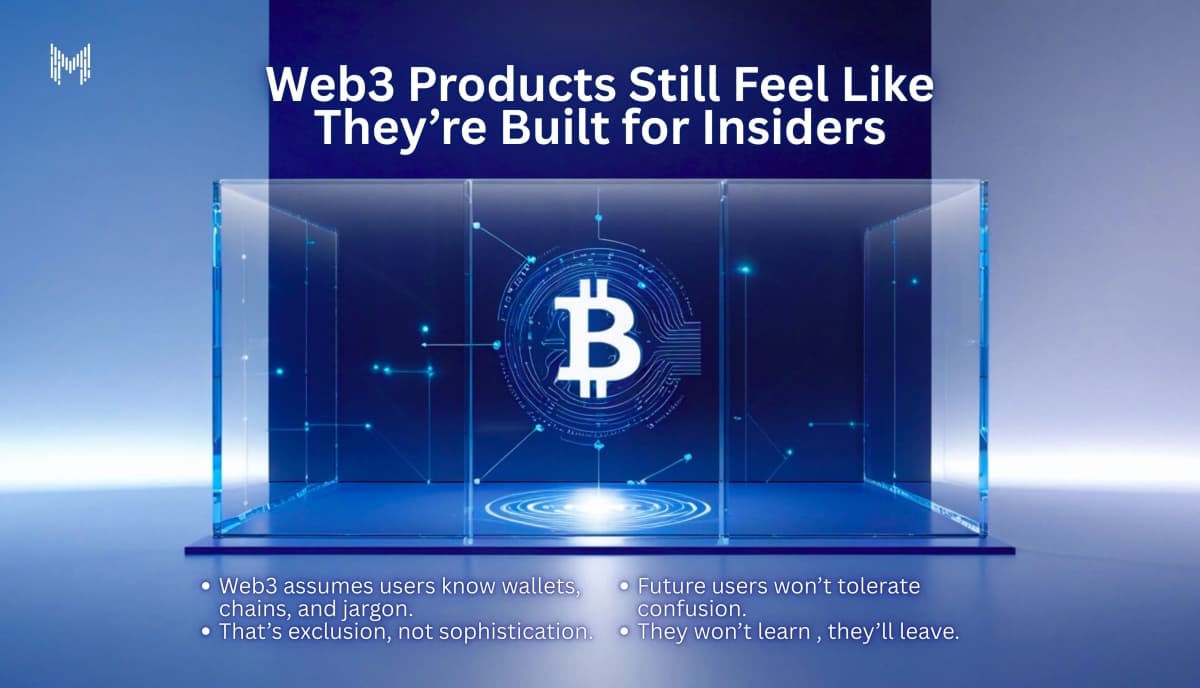
Web3 Products Still Feel Like They’re Built for Insiders
Be honest.
Most Web3 products still assume:
- You already understand wallets
- You already know what a chain is
- You already know the risks
- You already speak the language
- That’s not “advanced.”
That’s exclusion disguised as sophistication.
In 2026, that mindset won’t survive.
The next wave of users won’t tolerate feeling stupid just to use a product. They won’t read docs.
They won’t join Discords.
They won’t watch tutorials.
They’ll simply move on.
“But UX Compromises Decentralization” No, It Doesn’t
This is the argument that keeps Web3 stuck.
That improving UX somehow weakens decentralization.
It doesn’t.
What weakens decentralization is no adoption.
A perfectly decentralized system nobody uses is just a philosophy experiment.
UX isn’t about dumbing things down.
It’s about making complexity invisible.
Email didn’t win because people understood SMTP.
The internet didn’t win because people understood TCP/IP.
They won because someone made them usable.
2026 Will Punish Products That Feel Fragile
Here’s what users hate more than anything:
Uncertainty.
And Web3 UX is full of it.
- “Will this transaction fail?”
- “Did I sign the right thing?”
- “Why did the fee change?”
- “Where did my funds go?”
Every unanswered question creates friction.
Every moment of doubt creates fear.
In 2026, users will expect:
- Clear states
- Predictable outcomes
- Human language
- Obvious next steps
Anything less will feel broken.
The Real Competition Isn’t Other Web3 Products
This is where teams misjudge the market.
Your competition isn’t another protocol.
It’s Web2 convenience.
Users are comparing your product to:
- One-tap payments
- Password resets
- Undo buttons
- Clear confirmations
They don’t care that Web3 is “new.”
They care that it’s harder.
And harder never wins at scale.
UX Is the New Trust Layer
In Web3, trust is supposed to be replaced by code.
But here’s the reality:
Users trust what feels safe.
Clarity creates trust.
Feedback creates trust.
Predictability creates trust.
If your product feels chaotic, users assume it’s risky even if the smart contract is perfect.
In 2026, UX will become the trust layer users rely on.
Why Most Web3 Teams Are Still Getting This Wrong
Because improving UX requires humility.
It requires admitting:
- Your product isn’t obvious
- Your flows are confusing
- Your language is insider-focused
- Your design serves the team, not the user
That’s hard.
It’s easier to add another feature than remove friction.
It’s easier to explain complexity than simplify it.
It’s easier to blame users than fix design.
But 2026 won’t reward easy.
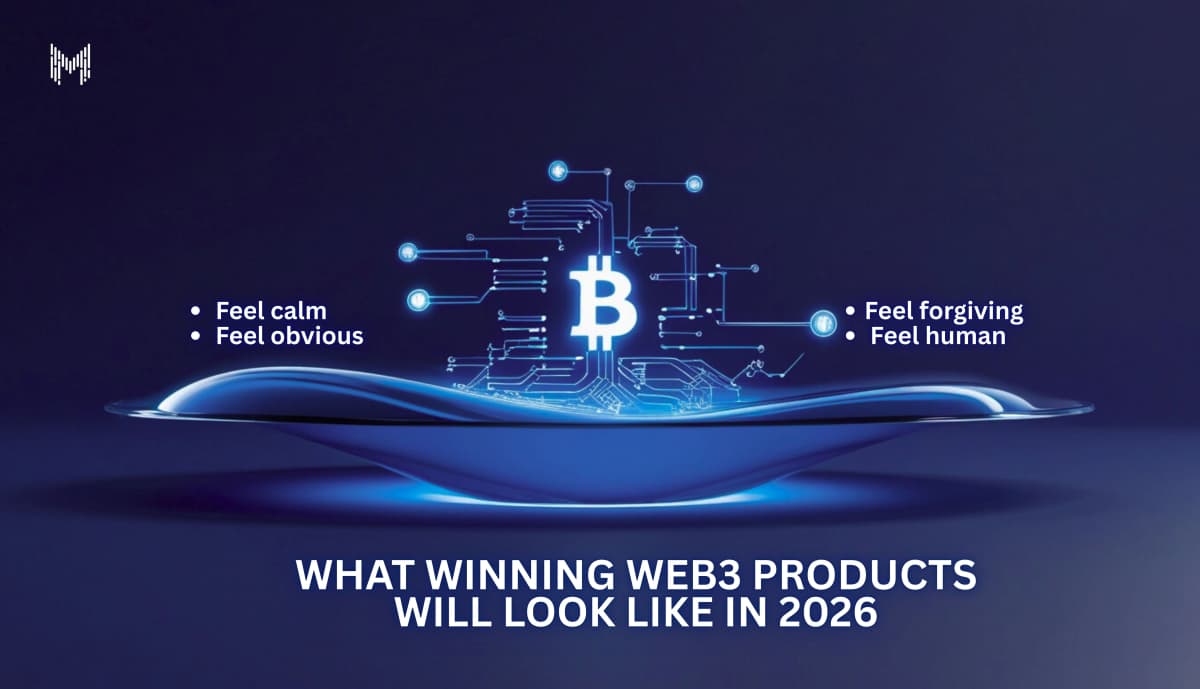
What Winning Web3 Products Will Look Like in 2026
They won’t scream “Web3.”
They’ll:
- Feel calm
- Feel obvious
- Feel forgiving
- Feel human
They’ll hide complexity instead of showcasing it.
They’ll guide instead of test users.
They’ll reduce fear instead of adding steps.
Decentralization will still matter but it will run quietly in the background, not dominate the experience.
Why This Matters for Builders Right Now
Because the next year is a filter.
Web3 isn’t early anymore.
The grace period is over.
Products that still feel experimental in 2026 won’t survive.
Products that respect users’ time and attention will.
UX isn’t a nice-to-have anymore.
It’s a survival requirement.
Why Choose MKaits Technologies
At MKaits Technologies, we don’t design Web3 products to look impressive in demos. We design them to make sense instantly to real users.
Our approach is simple:
- Clarity over cleverness
- Usability over ideology
- Adoption over assumptions
We focus on:
- Reducing cognitive load
- Simplifying user flows
- Designing for trust, not confusion
- Making Web3 feel usable not intimidating
Because decentralization without adoption doesn’t change anything.
In 2026, Web3 won’t be judged by its principles.
It will be judged by how it feels to use.
If your product makes users anxious, confused, or afraid it won’t matter how decentralized it is.
The future of Web3 belongs to products that respect users enough to make things clear.
Everything else is noise.