💡What You'll Learn
- How AI improves threat detection
- How hackers use AI to attack
- What deepfake and phishing risks look like
- Why cybersecurity is now an arms race
- How to stay secure in the AI era
Machine learning is your strongest defense — and your biggest vulnerability.
A few years ago, cybersecurity felt predictable.
Hackers wrote scripts.
Security teams patched systems.
Firewalls blocked suspicious traffic.
It was a game of reaction.
Then AI entered the picture.
And everything changed.
The Day the Rules Broke
Imagine this.
A system that learns your behavior.
Knows when you log in.
How fast you type.
What files you access.
Now imagine something else.
A system that learns how to imitate you.
Perfectly.
That’s where we are today.
AI didn’t just upgrade cybersecurity.
It rewrote the rules.
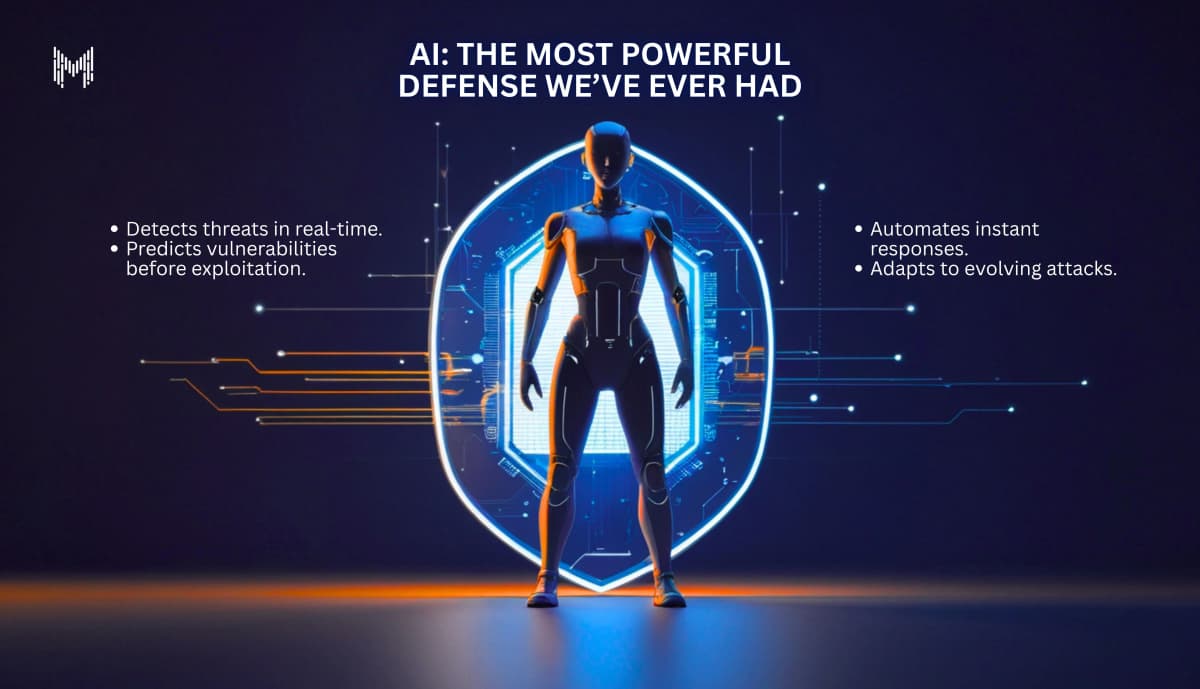
AI: The Most Powerful Defense We’ve Ever Had
Let’s start with the good news.
AI has made cybersecurity smarter.
Faster.
More proactive.
1. Threat Detection in Real-Time
Traditional systems relied on known attack patterns.
AI doesn’t.
It learns behavior.
So instead of asking:
“Have we seen this attack before?”
It asks:
“Does this look abnormal?”
That’s a huge shift.
Because modern attacks don’t always follow known patterns.
2. Predictive Security
AI doesn’t just react.
It predicts.
It can:
- identify vulnerabilities before they’re exploited
- detect unusual system activity
- flag risks early
This turns cybersecurity from reactive → proactive.
3. Automated Response
When something goes wrong, speed matters.
AI can:
- isolate threats instantly
- block suspicious activity
- trigger alerts without human delay
In many cases, it acts faster than any human team could.
But Here’s the Problem No One Wants to Admit
The same technology defending systems…
Is now being used to attack them.
Hackers Are Using AI Too
And they’re not behind.
They’re evolving just as fast.
1. Smarter Phishing Attacks
Phishing used to be obvious.
Bad grammar.
Weird formatting.
Suspicious tone.
Now?
AI generates:
- perfectly written emails
- personalized messages
- realistic conversations
You don’t feel like you’re being attacked.
You feel like you’re talking to someone you trust.
2. Deepfake Identity Attacks
Voice cloning.
Face generation.
Real-time impersonation.
Attackers can now:
- mimic executives
- fake video calls
- bypass identity verification
The line between real and fake is getting thinner.
3. AI-Powered Malware
Traditional malware follows patterns.
AI-powered malware adapts.
It can:
- change behavior to avoid detection
- learn system defenses
- evolve over time
Which makes it significantly harder to stop.
4. Automated Attacks at Scale
AI allows hackers to:
- scan thousands of systems instantly
- identify weak points faster
- launch large-scale attacks with minimal effort
This isn’t manual hacking anymore.
It’s automated exploitation.
The New Reality: It’s an Arms Race
This isn’t just cybersecurity anymore.
It’s an arms race.
AI vs AI.
Defenders vs attackers.
Both sides learning.
Both sides evolving.
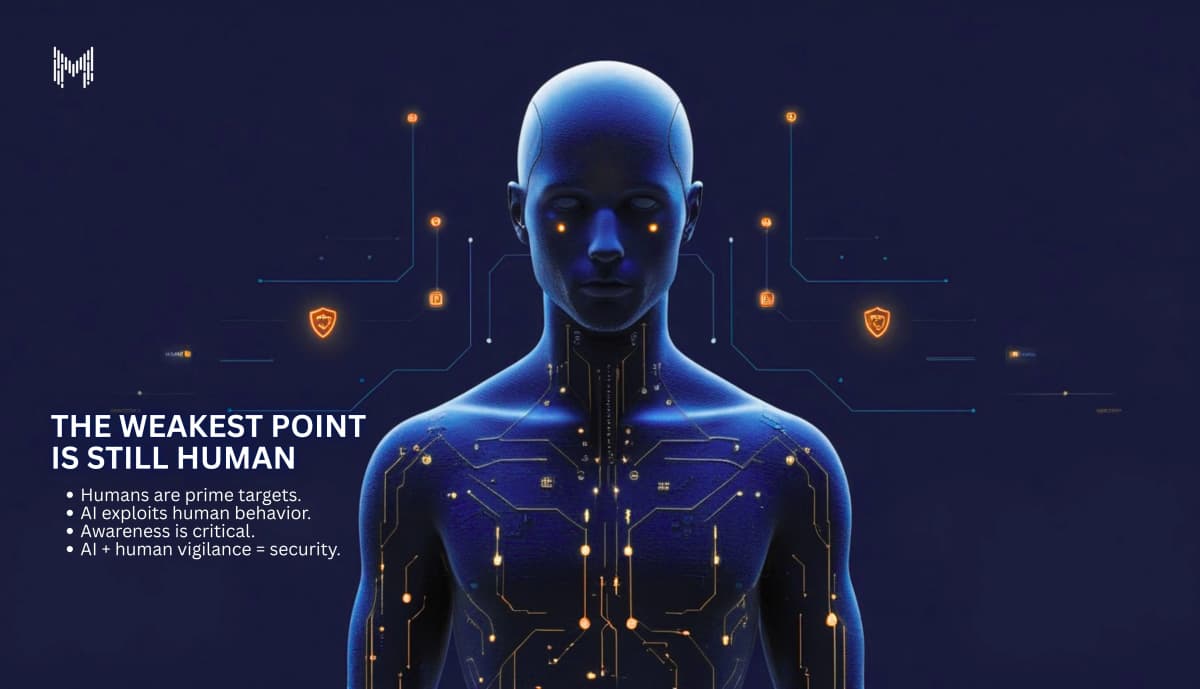
The Weakest Point Is Still Human
Despite all the advanced technology, one thing hasn’t changed.
Humans are still the easiest target.
People:
- click links
- reuse passwords
- trust familiar-looking messages
And AI makes exploiting these behaviors easier.
Why This Matters Right Now
We’re entering a phase where:
- attacks are more sophisticated
- defenses are more automated
- trust is harder to establish
And the gap between real and fake is shrinking fast.
This isn’t just a tech issue.
It’s a trust issue.
What Businesses Need to Understand
AI is not a “security solution.”
It’s a capability.
And like any capability, it depends on how you use it.
Companies that win in this space will:
- combine AI with strong security practices
- invest in user awareness
- design systems with zero-trust principles
- continuously adapt
Because static security no longer works.
The Shift From Prevention to Resilience
You can’t stop every attack anymore.
That’s the reality.
So the focus is shifting from:
❌ “How do we prevent attacks?”
To:
✅ “How do we detect, respond, and recover fast?”
That’s what modern cybersecurity looks like.
Why Choose Mkaits Technologies
At Mkaits Technologies, we understand that modern security isn’t just about protection — it’s about adaptation.
We focus on:
- AI-driven security solutions
- secure system architecture
- threat detection and prevention
- scalable, resilient infrastructure
Because in a world where attackers are getting smarter…
Your defenses need to be smarter too.
AI didn’t make cybersecurity easier.
It made it more complex.
More powerful.
More unpredictable.
The same tool that protects your system…
Can also be used to break it.
So the real question isn’t:
“Is AI good or bad for security?”
It’s:
“Are you prepared for both sides of it?”
Because in this new battlefield…
There are no passive players.